We spent $120K fixing a compliance problem that could have been avoided in week one.
The real mistakes that lead to expensive rebuilds, based on production healthtech systems we've shipped, reviewed, and fixed.
Built from real-world healthtech systems handling sensitive data
Most teams don't realize there's a problem until it's too late.
By the time compliance issues surface, teams are already preparing for enterprise deals, going through due diligence, or facing a security review.
At that point, architecture decisions are locked in, and fixing them is expensive. Not refactor expensive. Start over expensive!
- Compliance isn't a checklist you add at the end — it's an architecture decision made in week one.
- PHI data structure, audit logging, and role-based access can't be bolted on post-launch.
- Enterprise clients will ask how your data is structured. If you don't have an answer, the deal stalls.
Everything your team needs to know before writing a line of product code.
Real patterns. Real mistakes. Built from systems that went through actual compliance reviews.
The mistakes that cost us ~$120K to fix
A frank breakdown of the architectural decisions that seemed fine, until a compliance review revealed otherwise.
Why HIPAA is an architecture problem
Not a checklist. Not a policy document. The decisions that determine compliance happen at the database and API layer.
Real compliance gaps from production systems
Anonymized examples of where healthtech products typically break. With what the correct implementation looks like.
How to structure PHI vs non-PHI data
Data model patterns that make compliance reviewers comfortable, and the anti-patterns that raise immediate flags.
Audit logging patterns that actually pass reviews
What reviewers look for in audit trails, and why most implementations fall short under scrutiny.
A checklist before you build
A pre-build architecture checklist designed to catch HIPAA risks before they're embedded in your codebase.
This isn't generic compliance advice.
It's based on real implementation experience — including what a compliant audit log actually looks like at the data layer, and how most systems get it wrong.
This isn't theory from a compliance consultant. It's the output of systems that went through actual security reviews, enterprise due diligence, and post-launch audits.
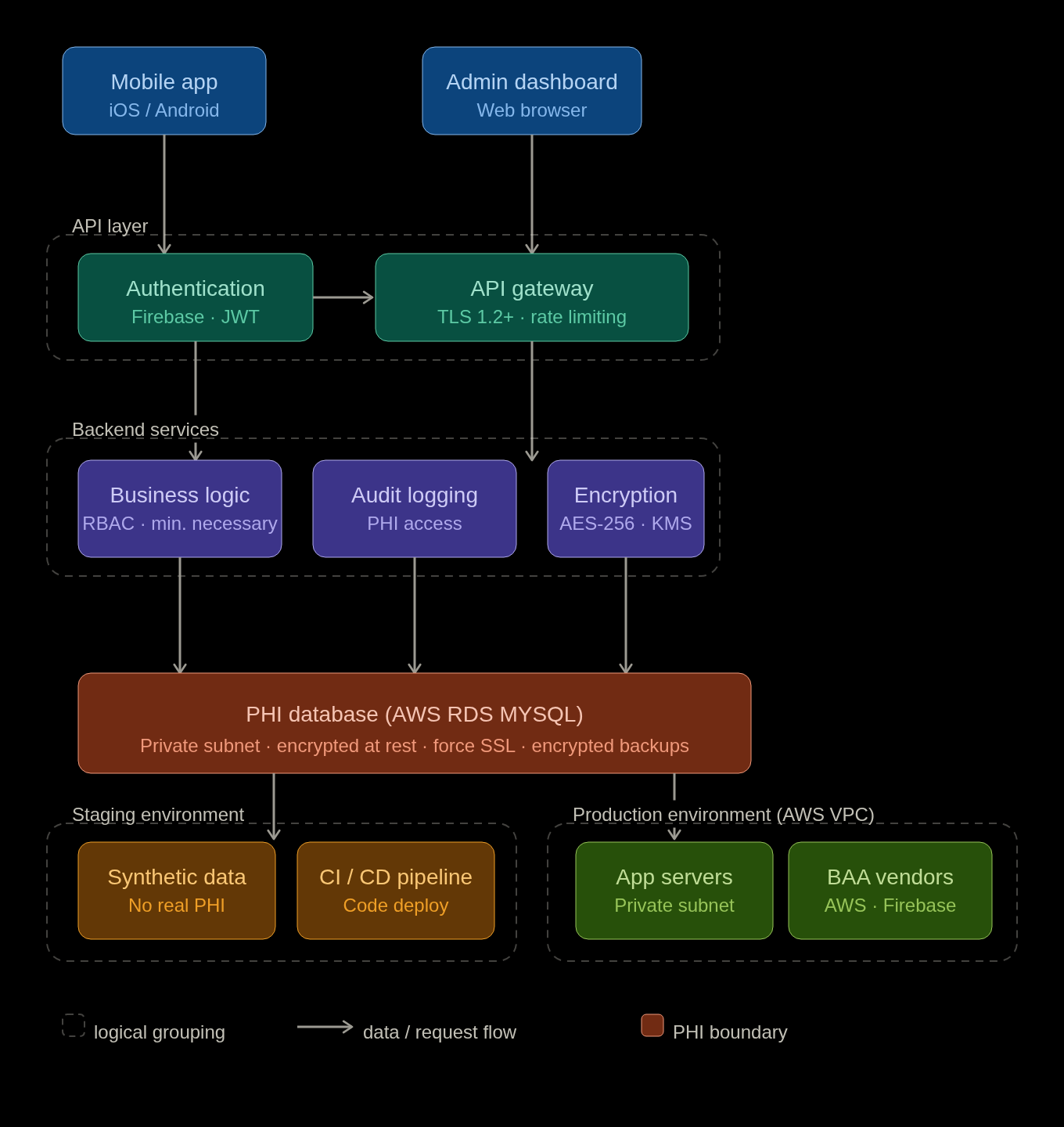
Wellbility: COVID era workforce health Platform
During the height of the pandemic, we architected and built a contact tracing and workforce health system used in real operational environments. The guide includes a breakdown of the compliance risks we identified, how we structured PHI data, and the decisions that made it through enterprise security review without a rebuild.
View Full Case Study →Deployed during an active public health crisis
Passed enterprise security review
Acquired post launch
Avoid the mistakes before they're built in.
If you're building a healthtech product, this guide will help you make the right architectural decisions before they become expensive ones.
🔒 No drip campaigns. Just the guide, straight to your inbox.
We review systems before compliance becomes a problem.
If you're building a healthtech platform and want an expert eye on your architecture before you're in a review, that's exactly what we do.
Schedule a Technical Strategy Call →